


What Is Boarding Up? A Practical Guide for Reading & the RG Area
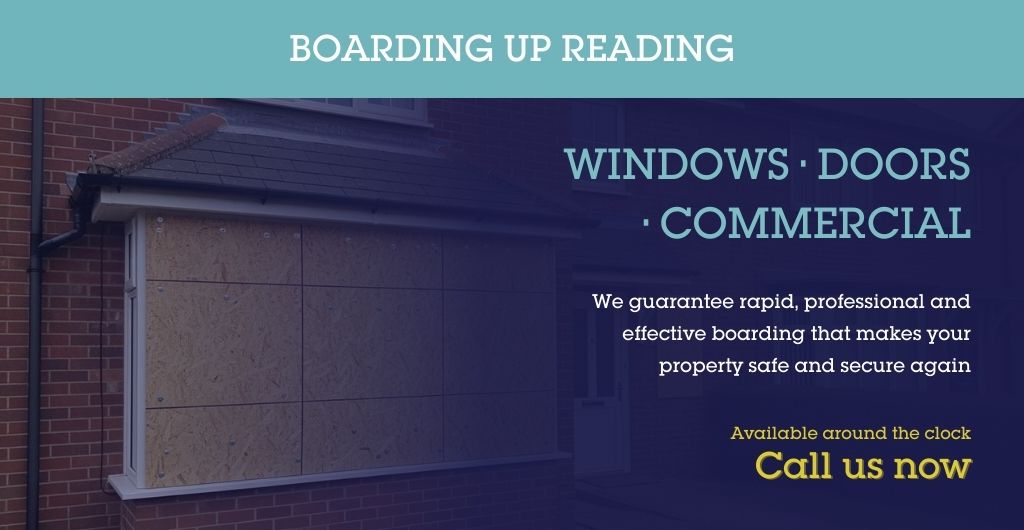
Boarding up is the process of securing a broken, missing, or vulnerable opening—most commonly a window, door, shopfront, or rooflight—using strong sheet materials and tamper-resistant fixings. In plain terms: it’s a fast, temporary way to make a property safe, weather-resistant, and far harder to enter until proper repairs can be arranged.
If you’re dealing with a smashed pane on a Victorian terrace in Caversham, a forced door on a student let near Reading town centre, or cracked glazing on a unit by the A33, boarding up is often the first step that prevents things getting worse. Boarding Up Reading covers Reading and the wider RG postcode area (RG1–RG45).
For urgent help, see emergency boarding up. For quotes and non-urgent work, you can also use our contact page.
When boarding up is needed (and when it isn’t)
Boarding up isn’t only for dramatic break-ins. In and around Reading, we’re often called out for problems that start small—then become a real security or water-ingress issue overnight.
Common reasons people need boarding up:
- Burglary or attempted break-in where the glass or frame is damaged and won’t lock
(more on this here: burglary repairs) - Vandalism such as smashed shopfront glazing, stones through windows, or repeated nuisance damage
(see vandalism repair) - Storm damage—especially after high winds when a sash window fails, a pane blows in, or rooflights get compromised
(see storm damage) - Accidental impact, including a ball through a window or vehicle strikes to a frontage
(see accident damage) - Fire damage where glazing/doors have failed and the building must be secured (we secure the property; we don’t carry out smoke/odour remediation)
(see fire damage) - Vacant or void property security between tenants, during probate, or while awaiting sale
(see vacant property boarding)
When boarding up might not be the right choice:
- If you’ve only got a hairline crack and the window remains secure and weather-tight, you may be able to wait for a glazier. We’ll tell you honestly if boarding looks unnecessary.
- If the opening needs immediate structural support (for example, after major impact), boarding up is still useful for security, but you may also need a builder/structural professional. We can secure it and discuss safe fixing points.
What boarding up actually involves (step by step)
Every opening is different—particularly in Reading where you’ll see everything from older timber frames and bay windows to modern aluminium shopfront systems. But the core process stays consistent.
-
Make the area safe (if it’s safe for us to do so)
We’ll assess hazards—loose glass, damaged frames, unstable doors, overhead risks for rooflights. If the frame is too compromised for non-destructive methods, we’ll explain options before proceeding. -
Measure and select the right board and method
We’ll choose the sheet material and thickness based on the opening size, the exposure, and whether it’s ground floor or more vulnerable to tampering. -
Fix the board securely using the least destructive method that will hold
Where possible, we aim to fix into solid structure rather than flimsy trims. On some windows we can use methods that minimise damage; in other cases, a strong mechanical fixing is the safest route. -
Check for weather resistance and obvious gaps
Boarding up isn’t a perfect substitute for glazing, but it should reduce draughts and water ingress. For exposed elevations (for example, properties facing open spaces or higher ground around the Thames Valley), we take extra care with fit and fixings. -
Provide documentation for your records/insurer
Customers typically receive time-stamped photos, a clear description of what’s been secured, and an itemised invoice. We’re not loss adjusters, but we can provide the paperwork insurers usually ask for (see insurance claims).
If you already know what you need—window, door, shopfront, or roof—start with our boarding up services in Reading.
Materials used: plywood vs OSB (and why it matters)
People often ask “is it just a bit of wood over the hole?” Done properly, it’s more specific than that.
Exterior-grade plywood (common for higher-risk openings)
For many jobs we use 18mm exterior-grade plywood because it’s strong, stable, and resists splitting when fixed correctly. It’s a good option for:
- Ground-floor windows and doors
- Shopfront sections where the opening is large
- Properties that may be unoccupied for a period
OSB (often suitable for smaller or lower-risk openings)
OSB (Oriented Strand Board) can be a practical choice for smaller windows or where the opening is less exposed. We may use 12mm OSB for certain situations, depending on the required strength and the fixing method.
We’ll talk you through what we’re using and why—especially if the property is in a higher-footfall location (for example, near Reading station, along Oxford Road, or close to busy parades in Earley and Tilehurst), where deterrence and anti-tamper fixing become more important.
Fixings and security: how we stop boards being pulled off
The difference between “covered” and “secured” is the fixing.
Depending on the opening, we may use:
- Anti-tamper fixings to reduce the risk of removal from outside—particularly important if the property will be unattended
- Through-bolting where appropriate, using internal timbers/spreaders to distribute load and avoid ripping out of weak substrates
- Heavy-duty screws and washers to prevent pull-through on larger panels
- Temporary steel doors when a standard boarded doorway isn’t practical for access or needs better security over a longer period
(see door boarding in Reading)
If you need ongoing access (contractors, facilities teams, or tenants), boarding up can be done in a way that’s secure but still manageable—sometimes a temporary steel door is the simplest, safest solution.
What can be boarded up?
Boarding up isn’t just windows. In Reading and across the RG area, we commonly secure:
- Windows (including bays, sash windows, and side/rear elevations)
Learn more: window boarding in Reading - Doors (forced entries, split frames, damaged locks, insecure UPVC)
Learn more: door boarding in Reading - Shopfronts and commercial glazing (larger panels, higher public exposure)
Learn more: shopfront boarding - Roof openings such as skylights/rooflights and damaged sections after storms
Learn more: roof boarding - Vacant property access points where you need a more robust medium-term option (screens/steel doors may be better than repeated re-boarding)
Start here: vacant property boarding
Boarding up in Reading: real-world situations we see
Reading’s mix of housing and commercial stock means the “how” can differ depending on where and what the building is.
- Terraces and older homes: Timber frames and uneven reveals are common around older streets and near established suburbs. The board often needs careful scribing and more considered fixing to avoid further damage.
- Flats and managed blocks: Access, shared entrances, and out-of-hours permissions can matter as much as the boarding itself—especially when you’re trying to keep communal areas tidy and safe.
- Retail and mixed-use: Busy footfall areas mean we focus on sturdy panels, clean edges, and anti-tamper fixings. If the unit must reopen quickly, we can secure it so you can safely assess next steps.
If your issue follows an incident, our situation guides can help you decide what to do next:
How long does boarding up last?
Boarding up is intended as a temporary security measure, but “temporary” depends on the situation:
- If glazing is being replaced quickly, it may be short-term (days).
- If the building is empty, under renovation, or awaiting legal/insurance decisions, it can be medium-term, and we’ll discuss whether steel doors or security screens are more appropriate than repeated timber boarding.
If your insurer or managing agent needs details of what’s installed, we can provide clear notes and photos (see insurance claims).
Cost: what affects the price of boarding up?
There isn’t one fixed price because the job changes significantly between, say, a small bathroom window and a full shopfront panel.
Common factors include:
- Size and number of openings
- Height and access (upper floors, rooflights, restricted rear access)
- Condition of the frame or surrounding structure
- Security level required (standard fixing vs anti-tamper; timber vs steel door/screens)
- Whether you need an immediate attendance or planned appointment
For a transparent overview of how we price work, see boarding up pricing.
What you can do right now (before we arrive)
If you’ve just discovered damage, a few practical steps can make things smoother:
- If it’s a crime, call the police and keep your reference number.
- Take photos if safe—wide shots and close-ups help with insurance and any follow-on repairs.
- Don’t clear broken glass with bare hands, and avoid disturbing entry points if a break-in is suspected.
- Call your insurer early if you’re likely to claim. We can provide documentation, but we can’t approve claims on their behalf.
If you need urgent help outside normal hours, go straight to emergency boarding up.
FAQs about boarding up (Reading & RG)
Is boarding up covered by insurance in Reading?
Often it can be, especially after burglary, vandalism, storm damage, or fire-related incidents—but it depends on your policy and excess. We’re not loss adjusters, but we can provide itemised invoices and supporting photos to help with your claim. See insurance claims.
Can you board up a smashed shopfront so we can secure stock overnight?
Yes—shopfronts are a common call-out, particularly where the unit is exposed to passing footfall. We’ll assess the opening size, choose suitable sheet material and fixings, and secure it to deter removal. See shopfront boarding.
Will boarding up damage my window frame or brickwork?
Sometimes fixings are unavoidable to make the property properly secure. Where possible, we use methods that reduce unnecessary damage, and we’ll explain the approach before starting—especially if frames are already weakened or rotten.
How quickly should I board up after a break-in?
As soon as it’s safe and practical. A compromised window or door is an open invitation, and weather can cause additional damage quickly. If this has just happened, use our burglary repairs guide and call if you need urgent attendance.
Do you board up vacant properties between tenants?
Yes. For voids, we’ll talk through whether timber boarding is sufficient or whether longer-term measures are more cost-effective. See vacant property boarding.
Ready to secure your property?
If you’re unsure whether boarding up is needed, tell us what’s happened and we’ll talk you through options. We cover Reading and the RG postcode area and can help with both emergency and planned securing.
Ready to get started? Call 01182 308 876 or email us for a free, no-obligation quote.
