


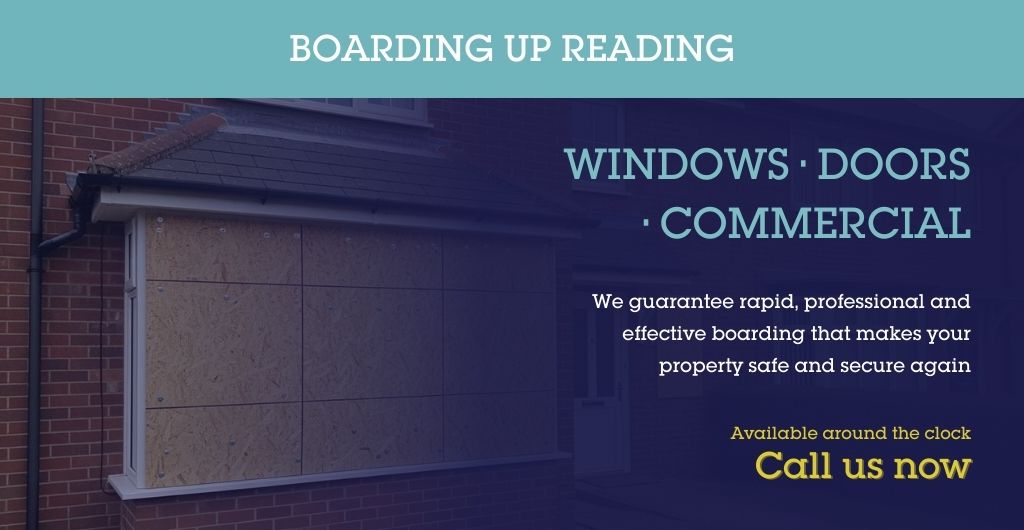
Property Boarding Up Situations in Reading (RG1–RG45)
When something goes wrong with a property, it rarely happens at a convenient time. A smashed window after vandalism, a door forced during a burglary, or storm damage that’s left a roof opening exposed can quickly turn into a bigger problem—weather getting in, theft risk increasing, and insurers asking questions.
This page explains the most common situations where boarding up in Reading is needed, what to do first, and how we help across Reading and the wider RG area (RG1–RG45). If you need urgent help, head straight to our emergency boarding up page.
The first 30 minutes: what to do (and what not to do)
Before anyone thinks about timber sizes or fixings, there are a few practical steps that make everything safer and smoother—especially if the police, fire service, or insurers will be involved.
-
Make sure everyone is safe
- If glass is hanging loose, a frame is unstable, or there’s overhead damage, keep people clear.
- If there’s been a break-in or an incident, don’t touch anything you don’t have to.
-
Call the police or emergency services if needed
- If a crime is in progress, call 999.
- For a burglary discovered after the fact, report it and note the crime reference number.
-
Take photos (only if it’s safe)
- Wide shots and close-ups help—especially before anything is moved.
- If it’s night, use a torch or exterior lighting rather than getting too close to broken glass.
-
Protect pets, children, and vulnerable occupants
- If there’s an exposed opening, draughts and rain can become a real problem quickly.
-
Contact your insurer early
- We’re not loss adjusters and can’t advise on policy wording, but we can provide the documentation insurers typically ask for (photos, an itemised invoice, a brief work statement). See insurance claims support.
Avoid: taping up broken panes as a “temporary fix” if the glass is cracked and under tension—it can make the eventual clean-up and securing harder, and it doesn’t usually deter opportunistic entry.
What we do in any situation: secure, stabilise, document
Across all scenarios, our aim is simple: secure the property and reduce further loss.
Depending on the opening and the condition of the frame, we’ll use the most suitable method from our core services:
- External-grade plywood boarding (commonly 18mm for larger or higher-risk openings)
- OSB boarding (often 12mm for smaller, lower-risk openings or internal protection)
- Anti-tamper fixings where there’s a risk the board could be removed from outside
- Temporary steel doors for forced entries or void properties that need more than timber can reasonably provide
You can read more about methods and what “boarding up” actually means on what is boarding up, or explore specific solutions under boarding up services.
Common situations we help with in Reading and the RG area
Reading is a mix of busy commercial streets, riverside flats, Victorian terraces, and suburban estates—so the “typical” damage we see varies. Below are the situations we’re most often called to.
Burglary / break-in damage (doors and windows)
After a break-in, the immediate problem is usually a forced door, a smashed pane near the lock, or a compromised frame that won’t close properly. In terraces around West Reading, for example, older timber frames can split when a door is forced; in newer estates around Shinfield or Lower Earley, multipoint mechanisms can fail and leave the door unusable.
What we typically do:
- Board or secure damaged windows to prevent easy re-entry
- Board up or stabilise damaged doors where repair isn’t immediately possible
- Where appropriate, fit a temporary steel door for stronger short- to medium-term security
If you’re dealing with a break-in now, see burglary repairs and boarding up. For the relevant services, visit door boarding in Reading and window boarding in Reading.
Vandalism (smashed glass, targeted shopfronts, repeated incidents)
Vandalism can be random, but we also see repeat targeting—especially where there’s easy access to glazing. In Reading, commercial units can be vulnerable after closing time, particularly where footfall continues late into the evening.
Common call-outs include:
- Smashed ground-floor windows
- Damaged or cracked shopfront glazing
- Panels kicked in around shared entrances or communal areas
Our approach is to secure quickly and leave a clean, professional temporary finish that:
- Deters opportunistic entry
- Helps you keep the premises safe until glazing is replaced
- Reduces exposure to weather and further damage
Learn more on vandalism repair and boarding up and shopfront boarding in Reading.
Storm damage (blown-in windows, loose roof sections, falling debris)
Storms can cause sudden failures—especially where a window was already weak, or where roofline components lift and expose an opening. In the Thames Valley, gusty conditions can turn a small issue into water ingress quickly.
Typical problems we secure:
- Broken windows from flying debris
- Conservatory or outbuilding glazing damage
- Roof openings and damaged skylights (where access is safe)
For overhead work, safety comes first. We’ll assess access and conditions, and if it isn’t safe to work at height (high winds, unstable surfaces), we’ll be clear about what can and can’t be done immediately.
See storm damage boarding and securing and roof boarding services.
Fire damage (post-fire property security)
After a fire, the structure and frames can be compromised, and there may be involvement from the fire service and investigators. Our role is not fire remediation (smoke/odour treatment is outside our scope), but securing the building once it’s safe and you have permission to proceed.
We can help with:
- Boarding up broken windows and damaged doors
- Securing openings created during firefighting (for example, forced entry points)
- Temporary protection to reduce further weather damage
If you’re dealing with this situation, read fire damage securing and boarding up.
Flood damage (swollen frames, compromised doors, ventilation considerations)
Flooding can affect doors and frames in ways that aren’t obvious at first. Timber can swell, composite doors can shift, and once water recedes you may find things no longer close or lock properly.
Where flood damage has affected security, we can:
- Secure openings that no longer lock
- Board vulnerable windows/doors while drying and repairs are arranged
- Discuss practical options to avoid trapping moisture (each case is different)
More details: flood damage boarding and securing.
Accident / impact damage (vehicle strikes, accidental breakage)
Impacts—from reversing accidents to fallen branches—often create larger, irregular openings. The priority is to make the site safe and prevent unauthorised access.
We often secure:
- Large openings where glass and frame are missing
- Damaged doors that no longer latch
- Shopfronts where a single panel failure compromises the whole frontage
If the surrounding structure looks unstable, we’ll flag that immediately. We can secure what’s safe to secure, but structural repairs may need a builder or specialist contractor first.
See accident damage boarding up.
What to expect when you call us
People usually call when they’re stressed, tired, and trying to juggle police reports, neighbours, tenants, or business reopening. We keep the process straightforward.
-
You tell us what’s happened
- Address/postcode (RG1–RG45)
- What’s damaged (window, door, shopfront, roof)
- Whether the property is occupied, vacant, or commercial
- Any access issues (gated entry, upper-floor flat, rear alley)
-
We explain the likely securing option
- Plywood vs OSB
- Fixing approach (including anti-tamper methods where appropriate)
- Whether a temporary steel door is a better fit for security
-
We arrive, assess, and secure
- If the frame is too damaged for non-destructive fixing, we’ll explain options before proceeding.
- We work to keep the area tidy and safe, especially around broken glass.
-
You receive documentation
- Time-stamped photos (before/after where possible)
- An itemised invoice and a brief statement of works—useful for landlords, letting agents, and insurers
For general questions, visit our FAQs or check pricing information to understand what influences cost (without vague promises or fixed figures).
Choosing the right solution: timber boarding vs steel options
Not every situation is best served by a sheet of board.
- Timber boarding (plywood/OSB) is ideal for most short-term security and weather protection, especially where glazing replacement is scheduled quickly.
- Temporary steel doors are often better for forced entries, repeated targeting, or vacant properties where you need robust access control. See temporary steel doors and door boarding.
- For longer-term void security, many landlords and facilities teams prefer dedicated vacant-property measures—see vacant property boarding and security.
If you’re not sure, we’ll talk you through the pros and cons based on the opening, location, and how long it needs to remain secure.
Situations we cover across Reading and RG postcodes
We cover Reading and surrounding towns and villages across the RG postcode area, including central Reading (RG1), south and west Reading (RG2/RG30), Caversham (RG4), Earley and Woodley (RG6), and further out towards Wokingham, Bracknell, Newbury and beyond.
To check your area, browse areas we cover or start with boarding up in Reading.
FAQs about boarding up after damage in Reading
Do you only work in emergencies, or can you do planned boarding?
We do both. Emergencies are covered via our emergency boarding up service, but we also help with planned securing for void properties, renovations, and risk management. For longer-term options, see vacant property services.
Is boarding up covered by insurance?
Often it can be, especially when it’s required to prevent further loss after an insured event (like burglary, storm damage, or impact). Policy terms vary, so check with your insurer. We can provide photos and an invoice—see insurance claims support.
How long does boarding up take?
It depends on the number and size of openings, access, and how damaged the frames are. A single ground-floor window is usually quicker than a large commercial frontage or a roof opening. If you describe what’s happened, we’ll give you a realistic expectation.
Can you board up a property if the frame is badly damaged?
Usually yes, but the fixing method may need to change. If the frame can’t take fixings safely, we’ll explain the options before starting. In some cases, a temporary steel door is the safer and more secure solution for forced entries—see door boarding in Reading.
I’m in Reading town centre—can you secure a shopfront out of hours?
Yes, we regularly help commercial customers with shopfront security. The key is safe access and a clear point of contact. For details on methods used for large glazing and frontage openings, see shopfront boarding in Reading.
Next step: tell us what’s happened
Whether it’s a break-in, vandalism, storm damage, fire, flood, or an accident, the priority is securing the building properly so you can move on to repairs.
Need help now? Call 01182 308 876 for immediate assistance.
Prefer email for non-urgent enquiries? Contact [email protected].
