


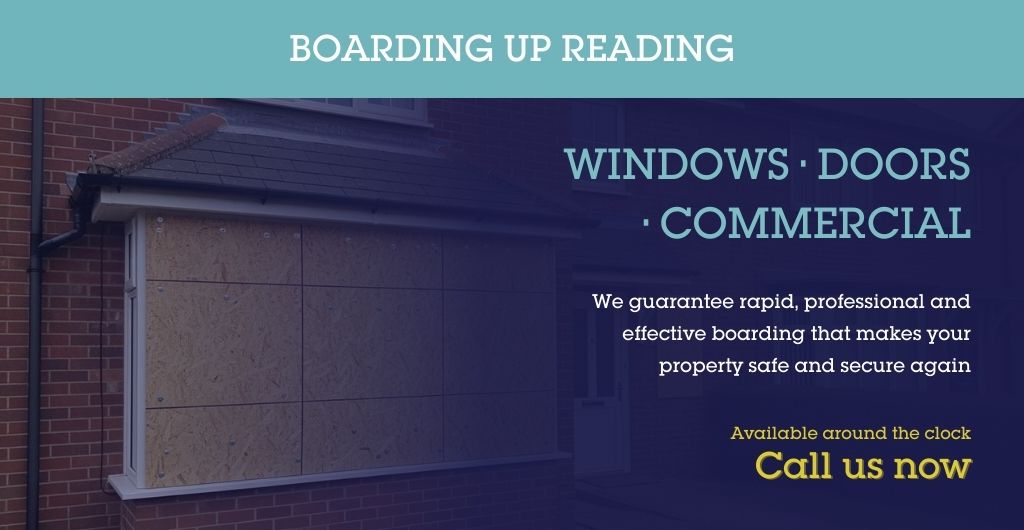
Residential boarding up in Reading (RG) – homes, flats and landlord properties
Residential damage is stressful. Whether it’s a smashed window after a break-in, a front door that won’t close, or storm damage that’s left your home exposed, the priority is always the same: make the property safe, secure, and weatherproof until proper repairs can be arranged.
At Boarding Up Reading, we provide residential boarding up in Reading and across the RG postcodes (RG1–RG45). We work with homeowners, tenants, landlords, letting agents and housing providers to secure houses, flats, maisonettes and vacant homes—without making the situation worse.
If you need urgent help, see emergency boarding up. If it’s planned securing (for example, a void property between tenancies), we can book in a visit and talk through longer-term options.
The kinds of homes we secure across Reading and the RG area
Reading’s housing stock is varied, and the way we board up needs to fit the building:
- Victorian and Edwardian terraces (common around West Reading, Newtown and parts of Caversham): tall sash windows, bay fronts and narrow access through terraced streets.
- 1930s semis (seen across Tilehurst, Earley and Woodley): larger window openings, side gates, and porches that can complicate door security after a forced entry.
- Flats and maisonettes (RG1 town centre and riverside developments): communal entrances, restricted parking, and the need to keep access safe for neighbours.
- New-build estates and infill builds (Shinfield, Winnersh, Green Park Village): modern glazing and multi-point locking doors—excellent until something fails or gets damaged.
We’ll always aim for a secure job that’s appropriate to the property and the risk level—especially if the home will be empty overnight.
For local service coverage, browse areas we cover or start with Reading.
Typical residential scenarios (and what we do next)
Burglary or attempted break-in
A forced entry often leaves a door split at the lock, a frame cracked, or glazing shattered. Even if the intruders didn’t get in, a damaged lock or broken panel can leave the home insecure.
What we typically do:
- Secure the opening with non-destructive methods where possible (so a joiner or glazier can repair properly later).
- If the door is beyond immediate securing, we can board it or discuss a stronger temporary option.
Related guidance: burglary repairs and boarding up and door boarding in Reading.
Smashed or cracked windows (accidents, impacts, neighbour disputes)
In homes, window damage is often accidental: a football through a pane, a lawnmower stone strike, or a cracked double-glazed unit that suddenly gives way. The issue is exposure—draughts, water ingress, and easy access for opportunists.
What we typically do:
- Board internally or externally depending on access and the safest fixing method.
- Use the right board thickness for the opening and risk level.
See window boarding in Reading for details.
Storm damage and wind-blown debris
Reading and the Thames Valley can see strong gusts and heavy rain that finds weaknesses—loose roof tiles, damaged skylights, and old frames that give up. If water is getting in, speed matters.
What we typically do:
- Prioritise weatherproofing and safety, not cosmetic finish.
- Secure broken rooflights/skylights where accessible and safe to do so.
More information: storm damage boarding and securing and roof boarding in Reading.
Fire damage (post-fire security)
After a fire, the fire service may have forced entry or removed glazing for ventilation. Even small kitchen fires can result in broken doors/windows or an insecure property.
What we typically do:
- Secure openings once the scene is safe and you have permission to proceed.
- Provide photo documentation for your insurer if requested.
Important note: we secure the property; smoke and odour remediation is outside our scope. See fire damage securing.
Flooding and water ingress
Flooding can distort timber frames and swell doors so they won’t close properly. Even when the water recedes, security can be compromised—and ventilation may be needed to help drying.
What we typically do:
- Secure the property while considering airflow needs (where appropriate).
- Advise on sensible next steps for repairs and drying (without pretending to be surveyors or loss adjusters).
Vacant homes, probate properties and landlord voids
Empty homes are a different risk: if nobody’s there to notice a problem, it can escalate. Landlords and families often need a property secured while it’s being cleared, marketed, or renovated.
What we typically do:
- Discuss the best option for the likely void period.
- Recommend more robust solutions where appropriate.
If that’s your situation, see vacant property boarding up.
How residential boarding up works (step-by-step)
Every job is slightly different, but the practical process is consistent:
-
Initial call and quick triage
We’ll ask what’s happened, what’s damaged (window/door/roof), whether anyone is inside, and whether the property will be left unattended. If police are involved, keep your incident/reference number. -
Site assessment on arrival
We check the condition of the frame and surrounding structure. If the frame is too damaged for a clean fix, we’ll explain options before proceeding. -
Select materials and fixing method
We choose board type/thickness and a fixing approach designed to resist tampering from outside and hold up to poor weather. -
Install and tidy down
We secure the opening and remove obvious hazards (loose shards within reach). We won’t claim to “make good” building work, but we will leave the area safe. -
Documentation for your records/insurer
If you need it, we can provide time-stamped photos, a clear statement of work, and an itemised invoice—useful for insurance claims.
Our methods and materials for domestic properties
Plywood vs OSB: what’s the difference?
We use boards appropriate to the opening and the security requirement:
- 18mm exterior-grade plywood is a common choice for windows and doors where strength and durability matter. It holds fixings well and stands up better to damp conditions.
- OSB (often 12mm for smaller openings) can be suitable where the opening is smaller or the boarding is very short-term, but it’s typically less resistant to sustained weather.
We’ll advise based on exposure (front elevation vs sheltered rear), property occupancy, and how long the boarding is likely to be in place.
Anti-tamper fixings and safe installation
For many residential jobs, the main concern is preventing removal from outside, especially if the home will be empty overnight. Where appropriate, we use anti-tamper fixings and install in a way that reduces pry points.
We also take care with:
- Sash windows and bay fronts on period terraces (to avoid unnecessary damage to mouldings and frames)
- UPVC frames and modern glazing (to secure without cracking frames)
- Flats and communal areas (keeping walkways safe and access clear)
When a temporary steel door makes sense
If a front or back door has been forced and the frame is compromised, boarding can be a short-term solution—but it isn’t always the most practical if you need repeated access.
In those cases, we may recommend a temporary steel door: stronger, re-usable, and better suited to medium-term security on vacant homes or long-running repairs. This is covered under door boarding in Reading.
Security screens for longer-term vacant properties
If a property will be empty for weeks or months (probate, refurbishment, repossession), a more durable option can be steel security screens that allow light/ventilation while resisting attack. We’ll talk through suitability and access needs first.
Explore options via vacant property boarding up.
Practical considerations for Reading homes (the real-world bits)
Residential call-outs in Reading and nearby areas often involve practical constraints:
- Parking and access: terraced streets around the town centre and West Reading can be tight; apartment blocks near the Oracle and riverside routes can require managed access.
- Rear access: many semis in Tilehurst, Earley and Woodley have side passages that help with safer rear-window boarding—unless gates are damaged during a break-in.
- Neighbour impact: in flats and close terraces, we keep noise and obstruction to a minimum and make sure communal doors and escape routes remain usable.
If you’re unsure whether you need boarding, or you’re trying to coordinate between tenant, landlord and insurer, check our FAQs or get in touch via the contact page.
What you can do before we arrive (safe, sensible steps)
If it’s safe to do so:
- Keep people away from broken glass and unstable frames.
- Take a few photos for your own records (and your insurer).
- Locate any spare keys, access fobs, or management contact details (for flats).
- If police attended, keep the crime reference/incident number handy.
- Don’t attempt a temporary fix that puts you at risk (climbing, sharp edges, unstable doors).
Residential FAQs
How much does boarding up cost in Reading for a house or flat?
Costs depend on the size and number of openings, access, material choice (plywood vs OSB), and whether the frame is secure enough for non-destructive fixing. We explain options clearly and provide documentation—see pricing for the factors that affect cost.
Will boarding up stop drafts and rain getting in?
Boarding up is designed to secure and weatherproof as much as possible, but it’s a temporary measure. If the surrounding frame is badly damaged or uneven, we’ll secure it safely and explain any limitations.
Can you board up a window in a flat with communal access?
Yes—this is common around central Reading and newer developments. We’ll need safe access and, where relevant, permission from building management. If you’re unsure, call and we’ll talk through it.
Is residential boarding up covered by insurance?
Often it can be, especially after burglary, vandalism, storm damage or impact—but policies vary. We’re not loss adjusters, but we can provide the photos and paperwork insurers typically request. See insurance claims.
Do you cover areas outside Reading town centre?
Yes. We cover RG1–RG45, including places like Caversham, Tilehurst, Earley, Woodley, Wokingham, Bracknell, Newbury and beyond. Start here: areas we cover.
Areas we regularly help with residential boarding up
We work across Reading and the wider RG area. If you’re searching locally, these pages may help:
Ready to secure your home?
If you’re dealing with a break-in, broken window, or storm damage, we’ll help you get the property secure and guide you through what happens next.
Ready to get started? Call 01182 308 876 or email us for a free, no-obligation quote.
