


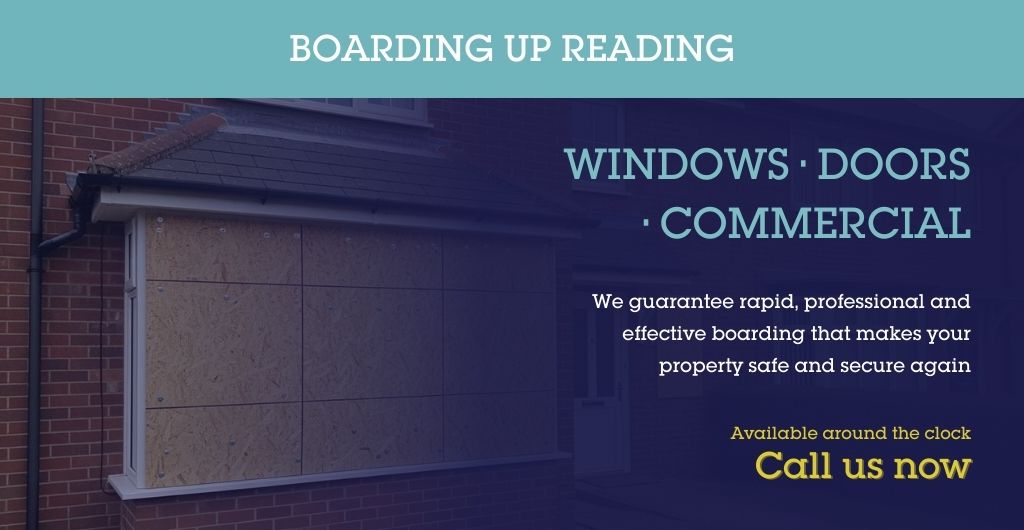
Commercial Boarding Up in Reading (RG) for Shops, Offices & Industrial Units
Commercial damage rarely happens at a convenient time. A smashed shopfront on Friar Street, a forced entry at an industrial unit near Richfield Avenue, or a broken door at an office by Reading Station can leave your premises exposed to theft, weather, and further vandalism.
At Boarding Up Reading, we provide commercial boarding up in Reading and across the RG postcode area (RG1–RG45). We secure shops, offices, warehouses, schools, care settings, and managed buildings with practical, insurer-friendly documentation—without making unrealistic promises about arrival times. If you need urgent help outside normal hours, use our dedicated emergency line: emergency boarding up.
Need to secure a commercial property? Call 01182 308 876 or email us.
What counts as a “commercial” boarding-up job?
Commercial properties tend to have:
- Larger openings (shopfront glazing, loading bay doors, curtain walling)
- Higher footfall and visibility, especially in town centres and retail parks
- Greater security and compliance needs, including controlled access and site sign-in
- Operational pressures (keeping staff safe, reopening quickly, protecting stock and data)
We board up and secure premises ranging from small units and cafés to multi-tenant office blocks and light industrial sites. If you’re comparing options, our overview of boarding up services in Reading and the explainer on what boarding up is and when it’s used may help.
Typical scenarios we see across Reading and the RG area
Commercial call-outs are often triggered by a sudden incident, but planned securing work is common too—especially for vacant units and refurb projects.
1) Smashed shopfronts and glazing impacts
This can be accidental (delivery mishaps), opportunistic vandalism, or attempted burglary. Shopfront glazing is often toughened or laminated, but once it’s compromised it becomes a security and safety risk.
For large panes and retail frontage, we’ll typically recommend shopfront boarding in Reading as the quickest way to make the site safe and prevent repeat damage.
2) Forced entry to doors, frames, and rear access points
Rear service doors, staff entrances, and side alleys are common attack points. If the door leaf or frame is split, standard boarding isn’t always the most secure solution.
Depending on the damage and how long the opening needs to remain secured, we may recommend door boarding in Reading or—where appropriate—upgrading to a more robust option such as temporary steel doors (particularly useful for empty units, repeated attacks, or longer repair lead times).
If the incident is linked to a break-in, our guidance on burglary repairs and securing explains what to do next and what your insurer is likely to ask for.
3) Storm damage and water ingress risks
High winds can lift roof coverings, dislodge skylights, or blow debris into glazing—especially on exposed sites and taller commercial buildings.
When the opening is overhead or weather-driven, we may use roof boarding in Reading to reduce water ingress and protect internal electrics, ceiling voids, or stock rooms. For storm-related incidents, see storm damage boarding and securing.
4) Fire damage securing (post-incident)
After a fire, even when the flames are out, the building can be open to the elements and unauthorised access. Fire-damaged frames can be fragile and unpredictable.
We can secure doors, windows, and vulnerable points once the site is safe to approach. We’re clear about scope: we secure the property; we don’t provide smoke or odour remediation. If you’re dealing with this situation, read fire damage securing.
5) Flood damage swelling frames and compromising access
Flooding can warp timber doors, swell frames, and weaken fixings. Sometimes you need to secure an opening while also allowing safe ventilation and access for drying equipment.
If flooding has affected your premises, flood damage securing covers the practical next steps.
6) Planned securing for vacant units, refurbishments, and change of tenancy
Retail and office space can sit empty between tenants—particularly where repairs or fit-outs are planned. Empty sites attract attention, so planned security can be a cost-effective step.
If your unit is unoccupied, look at vacant property boarding in Reading for longer-term options and what to consider before leaving a building unattended.
How we board up commercial properties (methods and materials)
Commercial boarding isn’t “one size fits all”. The right approach depends on the opening size, the substrate we can fix into, whether you need internal access, and how long the board-up needs to stay in place.
Site assessment first: safety, access, and damage type
Before fixing anything, we’ll look at:
- Whether the area is safe (loose glass, unstable frames, overhead hazards)
- Best access routes for materials (rear alleys, service yards, loading bays)
- Whether the opening is window, door, shopfront, or roof/skylight
- Whether you need short-term make-safe or medium-term security
If the frame is too damaged for non-destructive methods, we’ll explain the realistic options before proceeding.
Plywood vs OSB: what we use and why
We typically use:
- 18mm exterior-grade plywood for larger openings, higher risk sites, and stronger impact resistance
- 12mm OSB for smaller openings or where a lighter, cost-effective board is suitable
We choose materials based on the environment (exposed frontage vs sheltered rear), expected duration, and fixing points available.
Fixings: anti-tamper where it matters
For commercial work—especially where the property may be unattended—we often use anti-tamper fixings. The aim is simple: to make removal from the outside significantly harder.
Where we can, we’ll use methods that reduce unnecessary damage to existing frames, but security comes first. If there’s rotten timber or crumbling masonry, we’ll tell you what will and won’t hold before we start.
Temporary steel doors and security screens (medium-term options)
Boarding is often the fastest way to secure a site, but it’s not always the best medium-term solution.
- Temporary steel doors are ideal after forced entry where you need a strong, lockable access point for contractors and insurers.
- Security screens can be suitable for void properties and repeat-target sites where you want robust protection without permanently altering the structure.
If you’re managing multiple properties (or dealing with a unit that keeps getting targeted), we can discuss a more resilient approach rather than repeating short-term board-ups.
Rooflights and overhead openings
Roof and skylight work often involves extra planning: safe access, weather conditions, and suitable fixing points without creating new leaks. Our aim is to secure and weatherproof as far as practicable, then provide clear photos and notes for your roofer or facilities team to plan permanent repairs.
For more detail, see roof boarding in Reading.
What you can expect when you call us (commercial jobs)
Commercial clients usually need clarity: what’s happening now, what it will look like after, and what paperwork they can pass on internally or to insurers.
When you contact us, we’ll ask:
- Address and postcode (Reading and surrounding RG districts)
- What’s been damaged (shopfront, door, window, rooflight)
- Whether police, fire service, or alarm company are involved
- Any site rules (security gate codes, keyholders, loading restrictions)
- Whether the building must remain accessible (staff entry, contractor access)
On completion, you’ll typically receive:
- Time-stamped photos of the secured openings
- A clear description of the works carried out and materials used
- An itemised invoice suitable for FM records or insurers
If you’re going through a claim, our guidance on insurance claims for boarding up explains the sort of documentation insurers usually request. We’re not loss adjusters, but we can provide the practical evidence most claims processes need.
Commercial sites we commonly secure
We regularly help secure:
- Retail units and shopping parades (front glazing and rear doors)
- Offices and managed buildings (ground-floor vulnerabilities, communal entrances)
- Warehouses and light industrial units (personnel doors, windows, loading areas)
- Hospitality venues (pubs, restaurants, takeaways)
- Schools, community buildings, and facilities sites (outbuildings and ground-floor windows)
If your issue is specifically a window opening, start with window boarding in Reading. If it’s a door or forced entry point, door boarding in Reading is usually the right fit.
Where we work: Reading and the wider RG postcode area
We cover Reading and surrounding towns and villages across RG1–RG45, including residential-heavy suburbs and mixed commercial districts.
Common commercial areas we attend include:
- Central Reading and the station area: boarding up in Reading
- West-side mixed residential/commercial areas: boarding up in West Reading
- Expanding business and commuter districts: boarding up in Earley and boarding up in Woodley
- Thames-side villages with small parades and offices: boarding up in Sonning and boarding up in Pangbourne
For the full list, see areas we cover.
Micro case study: securing a damaged shopfront near Reading town centre
A small retail unit near the Oracle end of town reported overnight impact damage to the front glazing. The opening was large enough to risk public access and weather exposure, and the tenant needed the premises made safe before staff arrived.
We attended, cleared loose hazards where safe to do so, then installed exterior-grade plywood cut to suit the shopfront span with anti-tamper fixings to reduce the chance of removal from the pavement side. We provided time-stamped photos for the tenant’s insurer and facilities contact, and left the site secure for the glazing contractor to measure up.
(Every job differs—especially with modern shopfront systems—so we’ll always confirm the safest fixing approach on arrival.)
FAQs: commercial boarding up in Reading (RG)
Do you board up shops and retail units as well as offices?
Yes. We secure shops, cafés, offices, warehouses, and managed buildings. Retail jobs often involve large openings—see shopfront boarding in Reading for how we approach them.
Can you keep a commercial property accessible for staff or contractors?
Usually, yes. If you need entry after securing (for stock removal, IT, or contractor access), tell us when you call. Where a standard board-up would block access, we can discuss alternatives such as door boarding in Reading with a more controlled access solution.
Is boarding up covered by commercial insurance?
Often it can be, but policies vary. Keep your incident number (police or fire reference if applicable) and notify your insurer early. We can provide photos and an itemised invoice—see insurance claims for boarding up.
How long does commercial boarding up take?
It depends on opening size, access, and how much damage there is to the frame or surrounding structure. A single window is typically quicker than a full shopfront span or a rooflight. We’ll give you a realistic indication once we know what’s been damaged.
Do you cover sites outside Reading town centre?
Yes—across RG1–RG45. If you’re unsure, check areas we cover or contact us with your postcode.
Next steps: secure your premises and reduce the risk of repeat incidents
If your commercial property has been damaged, the priority is to make it safe, secure the opening, and document the condition so you can move forward with repairs and insurance.
Ready to get started? Call 01182 308 876 or email us for a free, no-obligation quote.
