


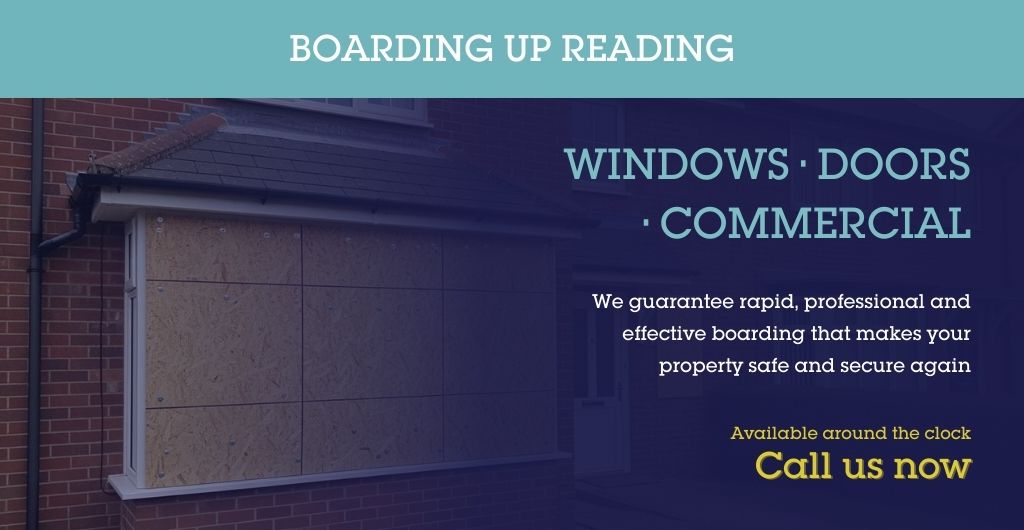
Boarding Up for Different Property Types in Reading (RG1–RG45)
If you’re dealing with a smashed window, a forced door, or a building left exposed after an incident, the next steps can feel urgent and unclear. Our boarding up services in Reading are tailored to the type of property you’re trying to protect—because securing a terraced house in Katesgrove isn’t the same as securing a shop unit near Broad Street or a vacant building off the A33.
At Boarding Up Reading, we secure residential, commercial, and vacant properties across Reading and the wider RG postcode area (RG1–RG45). We’ll talk you through the most practical option, fit boards or temporary security safely, and provide the documentation you’ll likely need afterwards.
If the situation is urgent or out of hours, go straight to emergency boarding up or call 01182 308 876.
Why property type matters when boarding up
“Boarding up” gets used as a catch-all term, but the right approach depends heavily on the building:
- Access & height: Ground-floor windows are usually straightforward; upper floors, skylights, and rear access over extensions can change the method and fixings.
- Frame condition: A modern uPVC casement needs a different fixing strategy to a rotten timber sash box, and we’ll always explain the least-destructive option first.
- Risk profile: A lived-in home often needs a temporary solution until glazing is replaced. A vacant property may need something more robust for weeks or months.
- Public-facing exposure: Shopfronts, offices and schools need clean, safe installations that reduce risk to passers-by and staff.
If you’re unsure which route fits, you can start with what is boarding up and we’ll guide you from there.
Residential boarding up (homes, flats & maisonettes)
Reading’s housing stock is varied—Victorian and Edwardian terraces around Caversham, Katesgrove and Newtown, 1930s semis in Tilehurst and Woodley, plus newer estates around Green Park and Shinfield. Each comes with its own quirks when a window breaks or a door is forced.
Common residential situations we’re called to
- Burglary damage (splintered frames, forced locks, prised patio doors)
- Accidental breakages (football through a pane, cracked double glazing)
- Storm damage (blown-in panes, broken conservatory panels, loose doors)
- Fire service entry (doors or windows compromised during access)
If the problem follows a break-in, our burglary repairs and boarding up page explains what to do first (including keeping your crime reference number handy).
How we usually secure homes
We commonly use:
- 18mm exterior-grade plywood for most domestic window and door openings where strength and weather resistance matter.
- 12mm OSB for smaller or lower-risk apertures where appropriate (for example, certain shed/garage openings), depending on exposure and how long it needs to remain in place.
Fixing methods vary by frame and finish. Where possible, we use non-destructive, internal fixing (to reduce external tampering and avoid unnecessary damage). If frames are already compromised—common with older timber—we’ll explain the options before proceeding.
For the most relevant services, see:
What homeowners and landlords typically need afterwards
We’re not loss adjusters, but we can provide what insurers commonly ask for:
- Time-stamped photos before and after (where safe to take them)
- A clear statement of work carried out
- An itemised invoice for your records/claim
For more on this, visit insurance claims support.
Commercial boarding up (shops, offices, schools & sites)
Commercial properties in Reading range from high-footfall retail around Broad Street and The Oracle, to offices along the A33 corridor and around Green Park, and light industrial units with roller shutters and service yards near Reading West. The main difference with commercial jobs is that security and safety have to work alongside trading hours, staff access, and public visibility.
Typical commercial call-outs
- Smashed shopfront glazing (impact damage, vandalism, attempted entry)
- Rear service door attacks (often at night, where access is hidden)
- Storm damage to panels and entrances
- Vacant unit handovers between tenants (planned boarding or steel security)
When it’s a public-facing frontage, we prioritise an installation that’s solid, tidy, and safe—with fixings that reduce the chance of boards being removed from outside.
Options we often recommend for commercial premises
Depending on duration and risk:
- Shopfront-grade boarding with larger sheets, appropriate bracing, and anti-tamper fixings
- Temporary steel doors where a doorway is no longer secure but the premises still needs controlled access
- Security screens for longer-term void protection (especially where a site is repeatedly targeted)
Explore:
If you’re managing multiple sites or need planned works, it can help to review pricing information first so you understand what drives cost (size, access, fixings, duration).
Vacant & void property boarding up (empty homes, probate, repossessions)
Vacant properties are common across the RG area—homes between tenancies, probate houses, repossessions, and empty commercial units awaiting fit-out. In places like Reading, an empty building can attract attention quickly, particularly if there are obvious signs of damage, open access, or mail piling up.
The key difference with voids is that short-term boarding isn’t always enough. If the property will be unattended, you typically need a solution that is hard to remove from outside and resilient over time.
When to secure a vacant property
- Between tenants (especially if there’s a gap of more than a few days)
- After eviction or repossession
- Following repeated vandalism or attempted entry
- When windows/doors are awaiting replacement parts
- Prior to refurbishment or sale, if the building is empty
Security options for longer-term protection
We may recommend:
- Anti-tamper boarded installations for immediate coverage
- Temporary steel doors for a damaged doorway or where you need ongoing access for contractors
- Steel security screens where repeated targeting is a concern
Read more on vacant property boarding up.
Specialist property features we commonly handle in Reading
Not every call-out is a standard front window. Reading and the wider RG area has plenty of building features that change the job:
- Bay windows on terraces (especially around central Reading and older suburbs) where multiple panes may need covering as one secure unit
- Rear patio doors and wide openings on 1930s semis and modern builds
- Communal entrances on flats and maisonettes where we may need to keep safe access for residents
- Skylights and rooflights on extensions and commercial roofs (access and weatherproofing become critical)
For overhead or awkward openings, see roof boarding.
What to expect when you contact us
Whether it’s a home in RG1, a unit in RG2, or a site further out across the RG postcode area, the process is straightforward:
- Tell us what’s happened and where (Reading area, nearest road/landmark if helpful).
- We’ll ask a few practical questions: size of opening, ground floor or upstairs, any remaining glass, whether police/fire service are involved.
- We arrive and assess the safest fixing method based on the frame and the risk of further damage.
- We secure the opening with suitable board and fixings, aiming for strength and weather resistance.
- You receive documentation (photos where possible, job summary, and an invoice).
We don’t quote guaranteed arrival times—traffic around the A329(M), the IDR, or the M4 can affect travel—but urgent jobs are prioritised and we’ll keep you informed.
Which service do you actually need?
If you’re choosing between options, these pages explain each solution clearly:
- window boarding in Reading for broken/cracked windows and vulnerable glazing
- door boarding in Reading for damaged entrances and forced doors
- shopfront boarding for retail glazing and commercial frontages
- roof boarding for rooflights, skylights, and storm-damaged openings
If the question is “what do I do now?”, the situation guides can help:
- storm damage securing
- fire damage securing
- vandalism repair and boarding up
- accident damage boarding up
FAQs about boarding up by property type
Do you board up flats and communal entrances?
Yes. Flats and maisonettes often need extra care to keep safe access for residents and to avoid creating hazards in shared hallways. Tell us if it’s a communal door, a buzzer entry, or if access is via a rear stairwell, and we’ll plan accordingly. For more general answers, see FAQs.
I’m a landlord—should I board up a property between tenancies?
If the property will be empty and there’s any sign of vulnerability (a damaged window, weak door, or previous attempted entry), boarding up or fitting a more robust temporary solution can reduce the risk of further loss. For medium-term protection, vacant property boarding up explains the options.
What’s best for a shopfront: plywood, a temporary door, or a security screen?
It depends on what’s damaged and how long the solution needs to last. Plywood boarding can be ideal for immediate, short-term security. Temporary steel doors are useful when a doorway is compromised but you still need controlled access. Security screens can be better for longer-term void protection. Start with shopfront boarding and we’ll advise based on your premises.
Is boarding up covered by insurance for residential or commercial properties?
Often it can be, particularly when boarding up is needed to prevent further damage after an insured event (burglary, storm, impact). We’ll provide photos and an invoice to support your claim, but we’re not insurers or loss adjusters. See insurance claims support for practical guidance.
Can you secure a property if the frame is badly damaged?
Usually, yes—but the method may change. If the frame is too compromised for non-destructive fixing, we’ll explain the options before proceeding. In some cases, a temporary steel door or a different fixing strategy is safer and more secure than trying to fasten into damaged timber or fractured masonry.
Areas we cover across Reading and the RG postcode
We cover Reading and the wider RG region (RG1–RG45), including central Reading and surrounding areas such as Caversham, Tilehurst, Earley, Woodley, Shinfield, Theale, Pangbourne, Twyford, Wokingham, Bracknell, Newbury and beyond.
For location pages and local details, see areas we cover or our main Reading area page.
Helpful Links
- emergency boarding up
- window boarding in Reading
- commercial property boarding up
- vacant property boarding up
- insurance claims support
- pricing information
Ready to get started? Call 01182 308 876 or email us for a free, no-obligation quote.
