


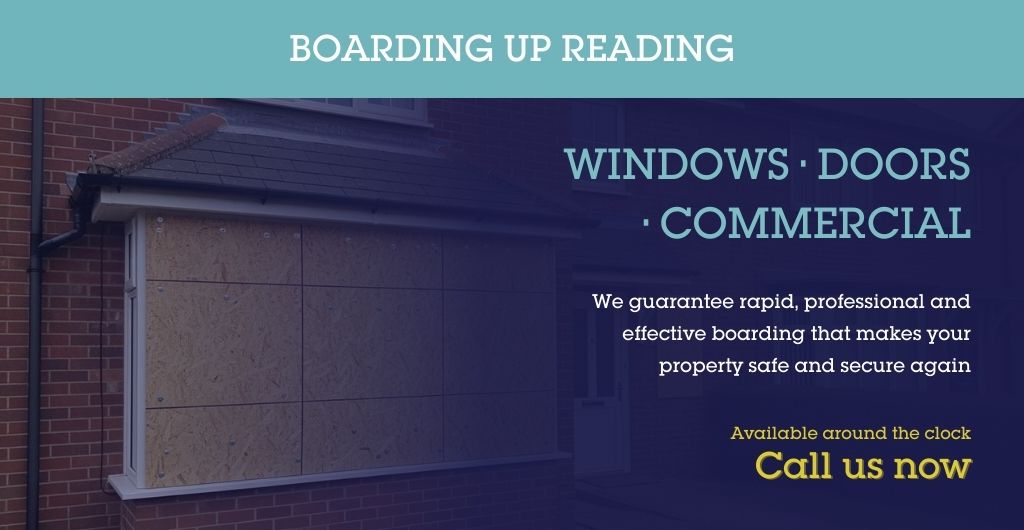
Insurance Claims Support for Boarding Up in Reading (RG1–RG45)
If you’ve had a break-in, storm damage, vandalism or an accident, dealing with the insurer can feel like a second emergency. Our job is to secure the property properly first, then give you the documentation that insurers typically ask for.
Boarding Up Reading provides boarding up services in Reading and across the RG postcode area (RG1–RG45), with clear, itemised paperwork and time-stamped site photos to support your insurance claim where needed. We’re not loss adjusters and we can’t confirm what your policy will pay out—but we can help you present the situation clearly.
Need urgent help securing the property first? Use our emergency boarding up service and then come back to the claim details once the site is safe.
Call: 01182 308 876
Email: [email protected]
When you might need boarding up for an insurance claim
Most claims involving boarding up come down to one key requirement: you’re expected to take “reasonable steps” to prevent further damage or loss. If glazing is missing, a door has been forced, or a rooflight is broken, leaving it open can make things worse fast—especially in Reading’s wet and windy spells.
We’re commonly called out after:
- Burglary / attempted break-in – smashed panes, forced uPVC doors, damaged locks (see burglary repairs and boarding)
- Vandalism – broken shopfront glazing, repeated damage to rear windows, unlawful entry attempts (see vandalism repair and boarding)
- Storm damage – fallen branches, displaced roof panels, broken skylights (see storm damage boarding)
- Fire damage – broken windows/doors after emergency access; insecure openings once the scene is released (see fire damage securing)
- Accidents/impact – a vehicle strike to a low wall or shopfront; cracked glazing that can’t safely remain in place (see accident damage boarding)
If you’re unsure whether boarding is appropriate, the guide on what boarding up is and when it’s used explains the basics in plain English.
What insurers typically ask for (and what we provide)
Every insurer is different, but most want clear evidence of:
- What happened
- What was damaged
- What you did immediately to secure the property
- What it cost
When we board up a property, we can provide:
- Time-stamped photos of the damage and the completed boarding (when safe to do so)
- A clear statement of works describing what was secured (e.g., “rear kitchen window boarded internally” / “front door opening secured with temporary steel door”)
- Itemised invoice showing materials and labour
- Notes on access constraints (shared entrances, upper floors, rear access via alleyways, etc.)
- If requested, basic detail that helps third parties understand the method: board thickness, fixing method, and whether boarding was internal or external
This is especially helpful for landlords, managing agents, and facilities teams who need a clean paper trail for multiple stakeholders. If you’re securing a unit or office, see commercial boarding up in Reading for how we work around trading hours, loading bays, and site rules.
What we can’t do (honest limitations)
To avoid misunderstandings:
- We can’t guarantee your insurer will reimburse boarding costs—coverage depends on your policy and claim circumstances.
- We’re not loss adjusters and we don’t negotiate settlements.
- We don’t provide specialist remediation such as smoke/odour treatment after fire or drying after floods—we focus on making the property safe and secure.
- If frames or surrounding structure are unsafe, we may advise you to get a builder, glazier, or structural professional involved. Where we can, we’ll still secure the opening as a temporary measure.
What we can do is document the situation properly and secure the site in a way that reduces the risk of repeat entry and weather damage.
How to handle the first call with your insurer (practical checklist)
If it’s safe, take five minutes to gather the basics before you ring the insurer:
- Your policy number (or the address if you can’t access it)
- Police incident / crime reference number (for burglary and some vandalism claims)
- When the damage occurred (or when you discovered it)
- A short description of what’s compromised: “front lounge window smashed”, “rear door forced”, “shopfront glazing shattered”, “rooflight missing”
- Photos of the damage before boarding up (only if it’s safe and you won’t disturb evidence)
If you’ve just had a break-in, don’t tidy glass or touch entry points until police have advised—then arrange window boarding in Reading or door boarding in Reading as appropriate.
Our approach: securing the property in a claim-friendly way
Insurers generally want to see that the temporary security is:
- Strong enough to prevent access
- Fixed securely (not just wedged in place)
- Appropriate to the opening and surrounding condition
- Not creating new hazards (sharp edges, protruding fixings, unstable frames)
Windows: plywood vs OSB (and why we choose each)
For most domestic and many commercial openings we use:
- 18mm exterior-grade plywood for strength and weather resistance on larger or higher-risk openings
- 12mm OSB for smaller windows or where the risk profile is lower and a neat, fast fix is needed
The choice depends on the opening size, exposure (front elevation vs rear), and whether the property will be occupied.
If you’re in a terrace around Katesgrove, a bay window near Caversham, or a newer estate in Earley or Shinfield, the fixing approach can vary because frames and reveals vary. We’ll talk you through what we’re doing on site, and if a frame is too damaged for a non-destructive fix we’ll explain options before proceeding.
More detail is on window boarding in Reading.
Doors and entrances: when a temporary steel door makes sense
After forced entry, the door leaf and frame can be so compromised that boarding alone becomes an inconvenience (and sometimes a weak point if it’s a frequently used access route for trades or residents).
For vacant or high-risk properties, a temporary steel door can be a better insurance-friendly solution because it:
- Restores a lockable, controlled entry
- Reduces the likelihood of repeat entry compared with a boarded doorway
- Is suitable for medium-term security during repairs, probate, or renovation
See door boarding in Reading and vacant property boarding for typical scenarios.
Shopfronts and commercial glazing: protecting your frontage
Reading’s busy areas—around Broad Street, Friar Street, and the Oracle—tend to involve shopfront glazing and higher footfall. A smashed pane can create immediate risk to staff and the public, and you may need a solution that’s secure but also practical for signage and shutters.
We provide shopfront boarding in Reading with larger panels and anti-tamper fixings where appropriate, aiming to secure the opening cleanly so follow-on glaziers can measure and replace without unnecessary delays.
Rooflights and skylights: preventing weather damage
If a skylight is broken (common after storms or falling debris), the priority is stopping water ingress and preventing access from above—particularly on flat roofs and extensions.
We can help with roof boarding in Reading, but we’ll be honest about limitations: roof work depends on safe access and conditions. If weather or height makes it unsafe, we’ll discuss alternatives and next steps.
What happens when you book us (and what you’ll receive)
Once you call, we’ll ask a few practical questions so we bring the right kit:
- What’s damaged (window/door/shopfront/rooflight)?
- Is the property occupied?
- Is there safe access (keys, concierge, rear alley, shared hallway)?
- Are police/fire still on scene?
- Any immediate hazards (loose glass, unstable frames, traffic risk)?
On site, we’ll:
- Assess the opening and decide the safest fixing method
- Secure the area (especially important for shopfronts and communal entrances)
- Install boarding using appropriate materials and fixings
- Take completion photos (where safe and permitted)
- Provide paperwork for your records/insurer
You’ll typically receive an itemised invoice, a statement of works, and photos—useful for insurers, landlords, and letting agents.
For general cost factors (without fixed prices), see boarding up pricing.
Insurance-related questions we hear a lot (FAQs)
Will my insurance cover emergency boarding up in Reading?
It depends on your policy and the cause of damage. Many policies allow reasonable temporary security and “make safe” costs after insured events (like burglary or storm damage), but you’ll need to confirm with your insurer. We provide the documentation insurers typically request—photos and an itemised invoice—but we can’t guarantee reimbursement.
Should I call the insurer before you arrive?
If it’s safe and you can get through quickly, yes—especially for commercial premises. But if the property is open to the street or vulnerable to repeat entry, securing it first is often the priority. If you need urgent help, use emergency boarding up and then follow up with the insurer once the site is secure.
Do you provide photos and paperwork suitable for a claim?
Yes. We can provide time-stamped photos (where safe), an itemised invoice, and a statement of works describing exactly what was secured and how.
I’m a landlord/agent—can you invoice my company and include the tenant/property address?
Yes, we regularly work with landlords and managing agents across Reading and the wider RG area. Tell us how you need the paperwork laid out, and we’ll keep it clear and compliant for your records.
If the frame is badly damaged, can you still board it safely?
Often, yes—but methods change. If the frame or surrounding structure won’t take fixings safely, we’ll explain what’s possible (for example, internal boarding, spanning to sound material, or recommending a temporary steel door). We won’t proceed with a method we believe is unsafe.
Ready to secure the property and keep your claim moving?
If you’ve had damage in Reading or anywhere across RG1–RG45, we’ll help you secure the site quickly and provide straightforward documentation for your insurer.
Ready to get started? Call 01182 308 876 or email us for a free, no-obligation quote.
